Propeller

Thursday, November 29, 2012

Windows 8 with full Activators


Windows 8 is the current release of the Windows operating system, produced by Microsoft for use on personal computers, including home and business desktops, laptops, tablets, and home theater PCs. Development of Windows 8 started before the release of its predecessor in 2009. Its existence was first announced at CES 2011, and followed by the release of three pre-release versions from September 2011 to May 2012. The operating system was released to manufacturing on August 1, 2012, and was released for general availability on October 26, 2012.[3]
Windows 8 introduces significant changes to the operating system's platform, primarily focused towards improving its user experience on mobile devices such as tablets to rival other mobile operating systems like Android and iOS,[4] taking advantage of new or emerging technologies like USB 3.0, UEFI firmware, near field communications, cloud computing and the low-power ARM architecture, new security features such as malware filtering, built-in antivirus software, and support for secure boot (a UEFI feature which allows operating systems to be digitally signed to prevent malware from altering the boot process), along with other changes and performance improvements.
Windows 8 also introduces a new shell and user interface based on Microsoft's "Metro" design language, featuring a new Start screen with a grid of dynamically updating tiles to represent applications, a new app platform with an emphasis on touchscreen input, the new Windows Store to obtain and purchase applications for the system, and the ability to synchronize programs and settings between multiple devices.

New and changed features

New features and functionality in Windows 8 include a faster startup through UEFI integration and the new "Hybrid Boot" mode (which hibernates the Windows kernel on shutdown to speed up the subsequent boot),[34] a new lock screen with a clock and notifications,[35] and the ability for enterprise users to create live USB versions of Windows (known as Windows To Go).[36][37] Windows 8 also adds native support for USB 3.0 devices, which allow for faster data transfers and improved power management with compatible devices,[38][39] along with support for near field communication to facilitate sharing and communication between devices.[40]
Windows Explorer, which has been renamed File Explorer, now includes a ribbon in place of the command bar. File operation dialog boxes have been updated to provide more detailed statistics, the ability to pause file transfers, and improvements in the ability to manage conflicts when copying files.[41] A new "File History" function allows incremental revisions of files to be backed up to and restored from a secondary storage device,[42] while Storage Spaces allows users to combine different sized hard disks into virtual drives and specify mirroring, parity, or no redundancy on a folder-by-folder basis.[43]
Task Manager has also been redesigned, including a new processes tab with the option to display fewer or more details of running applications and background processes, a heat map using different colors indicating the level of resource usage, network and disk counters, grouping by process type (e.g. applications, background processes and Windows processes), friendly names for processes and a new option which allows users to search the web to find information about obscure processes.[44] Additionally, the Blue Screen of Death has been updated with a simpler and modern design with less technical information displayed.[45][46]

Safety and security

Additional security features in Windows 8 include two new authentication methods tailored towards touchscreens (PINs and picture passwords),[47] the addition of antivirus capabilities to Windows Defender (bringing it in parity with Microsoft's Security Essentials software)[48] SmartScreen filtering integrated into the desktop,[49] and support for the "Secure Boot" functionality on UEFI systems to protect against malware infecting the boot process.[50] Parental controls are offered through the integrated Family Safety software, which allows parents to monitor and control their children's activities on a device with activity reports and safety controls.[51][52][53] Windows 8 also provides integrated system recovery through the new "Refresh" and "Reset" functions.[54] Windows 8's first security patches would be released on 13 November 2012; it would contain three critical (most severe as per Microsoft) fixes.[55]
Hardware certification requirements for Windows tablets[91]
Graphics Card DirectX 10 graphics device with WDDM 1.2 or higher driver
Storage 10GB free space, after the out-of-box experience completes
Standard buttons 'Power', 'Rotation lock', 'Windows Key', 'Volume-up', 'Volume-down'
Screen Touch screen supporting a minimum of 5-point digitizers and resolution of at least 1366x768. The physical dimensions of the display panel must match the aspect ratio of the native resolution. The native resolution of the panel can be greater than 1366 (horizontally) and 768 (vertically). Minimum native color depth is 32-bits.
Camera Minimum 720p
Ambient light sensor 1–30k lux capable with dynamic range of 5–60K
Accelerometer 3 axes with data rates at or above 50 Hz
USB 2.0 At least one controller and exposed port.
Connect Wi-Fi and Bluetooth 4.0 + LE (low energy)
Other Speaker, microphone, magnetometer and gyroscope. If a mobile broadband device is integrated into a tablet or convertible system, then an assisted GPS radio is required. Devices supporting near field communication need to have visual marks to help users locate and use the proximity technology. The new button combination for Ctrl + Alt + Del is Windows Key + Power.

>> Click Here To Download <<<

***NOTE***

After you complete the main file download the Windows7-USB-DVD-tool to extract the iso file into your USD or DVD. Don't worry the windows 7 usd_dvd tool also work for the windows 8.
>>>click here to download the windows 7 usb_dvd loader(extractor)<<<


Prince of Persia: The Forgotten Sands

Prince Of Persia Forgotten Sands Box Artwork.jpg
Prince of Persia: The Forgotten Sands is a multi-platform video game produced by Ubisoft[9] which was released on May 18, 2010, in North America and on May 20 in Europe.[10] The games mark a return to the storyline started by Prince of Persia: The Sands of Time. Prince of Persia: The Forgotten Sands is the title of four separate games with different storylines. The main game was developed for PlayStation 3, Xbox 360, and Microsoft Windows, while the other three are exclusive for the PlayStation Portable, Nintendo DS, and Wii.
The PSP and Wii versions were developed by Ubisoft Quebec; the PS3, Xbox 360 and Windows versions were handled by Ubisoft Montreal with the help of Ubisoft Singapore; and the Nintendo DS version was made at Casablanca.[11]

Setting

The Forgotten Sands returns to the storyline established by Prince of Persia: The Sands of Time, and concluded by Prince of Persia: The Two Thrones.[11] On December 14, 2009, Ubisoft UK released the first details of the story on their official video portal.[12]
The game is an interquel, taking place in the seven year gap[13] between Prince of Persia: The Sands of Time and Prince of Persia: Warrior Within. The Prince character is supposed to be a cross between the character models in these two games. He is again voiced by Yuri Lowenthal.[14]

Characters

  • The prince: Fresh from his adventures in Azad, the prince is now stuck in a new epic adventure
  • Malik: The Prince's older brother, who unwisely releases the Sand army to save his kingdom.
  • Razia: A mysterious woman and queen of the Marid, who endows the prince with control over water
  • King Solomon: The ruler of the empire, and ally to Razia
  • Ratash: The main antagonist, an Ifrit who attacks the Kingdom of Malik
 >>> CLICK HERE TO DOWNLOAD

Prince Of Persia Two Thrones

NTSC cover of Prince of Persia: The Two Thrones
Prince OF Persia : T2t
Prince of Persia: The Two Thrones is an action-adventure video game developed and published by Ubisoft Montreal. It was released in December, 2005 in North America for the Xbox, Microsoft Windows, PlayStation 2, and the Nintendo GameCube. It was ported to the PlayStation Portable and Wii,[1] under the title Prince of Persia: Rival Swords with the Wii version utilizing the motion-sensing functionality of its controller, while the PSP version added exclusive content. A remastered, high-definition, version of The Two Thrones was released on the PlayStation Network for the PlayStation 3 on December 21, 2010.[2]
Following Warrior Within, The Two Thrones is the closing chapter in the Sands of Time saga.

Setting

Prince of Persia: The Two Thrones follows the second ending of Prince of Persia: Warrior Within, in which the Prince kills the Dahaka, essentially saving Kaileena. The game opens with the Prince and Kaileena about to sail into Babylon's port. Kaileena offers narration of the events passed and the story following, similar to the Prince's role as both protagonist and narrator in The Sands of Time.

Gameplay

The Two Thrones combines exploration and combat. Both elements make use of the Prince's acrobatic capability and agility. Throughout much of the game, the player must attempt to traverse the palace by running across walls, ascending or descending chasms by jumping back and forth between walls, avoiding traps, climbing structures and jumping from platform to platform, making other types of well-timed leaps, solving puzzles, and using discovered objects to progress.
During combat, many of the same moves vital to the player in other situations can be put to use to overpower enemies. An example is the ability of the Prince to rebound off walls in order to strike enemies decisively. The player generally attacks enemies and blocks using a dagger, although other objects/factors, such as the Dagger of Time and its time-control abilities eventually prove to be critical to victory.
In The Two Thrones, the Prince's acrobatic skills have improved. He is now able to launch himself off walls at 45 degree angles at strategically placed vertical shutters, slide down chutes, and balance on swinging poles, among other things. The designers have also improved the stealth system. Instead of merely being able to do more damage when striking without being seen, The Two Thrones uses a speed-kill system. If the player does not complete the speed kill, the enemy knocks him off and the speed kill fails. The amount of moves or the length of time required depends on how strong the opponents are. The same system is also used in some of the boss battles.
The Prince also develops a split personality, known as the Dark Prince, and this alter-ego constantly bickers with him in his mind about right and wrong. At times, the Prince physically transforms into the Dark Prince. These transformations are scripted and not controlled by the player. During these times, however, the Prince retains control of his body, and the player still has control over the character. For the most part, the Prince's dark side is simply an inner voice.
When controlling the Dark Prince, the player loses the ability to wield a secondary weapon, instead using the "Daggertail", a bladed whip fused to his arm. This allows medium range combat moves and new interactions with the environment. The Dark Prince also constantly loses health as a result of the semi-transformation, with eventual death from the loss. He goes back to full health whenever he collects Sand, from either a monster or object. Also, his Daggertail gives him a different button combination for speed kills, in which he strangles his victims. Coming into contact with water will allow the Prince to return to normal.

>> Click Here To Download <<<


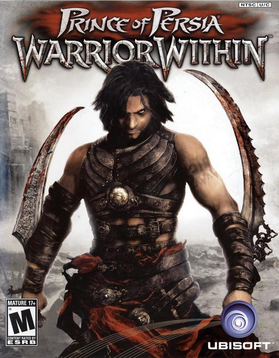
Prince Of Persia Warrior Within

Prince of Persia: Warrior Within PC game cover
Prince of Persia: Warrior Within is a video game and sequel to Prince of Persia: The Sands of Time. Warrior Within was developed and published by Ubisoft, and released on December 2, 2004 for the Xbox, PlayStation 2, GameCube, and Microsoft Windows.[1] It picks up where The Sands of Time left off, adding new features, specifically, options in combat. The Prince now has the ability to wield two weapons at a time as well as the ability to steal his enemies' weapons and throw them. The Prince's repertoire of combat moves has been expanded into varying strings that allow players to attack enemies with more complexity than was possible in the previous game. Warrior Within has a darker tone than its predecessor adding in the ability for the Prince to dispatch his enemies with various finishing moves. In addition to the rewind, slow-down, and speed-up powers from The Sands of Time, the Prince also has a new sand power: a circular "wave" of sand that knocks down all surrounding enemies as well as damaging them. The dark tone, a vastly increased level of blood and violence as well as sexualized female NPCs earned the game an M ESRB rating.
Following Warrior Within, a second sequel and a prequel were made, expanding the Sands of Time story. Prince of Persia: The Two Thrones was released on November 30, 2005 and Prince of Persia: The Forgotten Sands was released on May 18, 2010.[citation needed] A port of Warrior Within was done by Pipeworks, renamed as Prince of Persia: Revelations, and it was released on December 6, 2005 for Sony's PlayStation Portable.[citation needed] The port includes additional content including four new areas not available in the original release.[citation needed] On the 3rd of June 2010, a port of Warrior Within was released for the iOS.[citation needed] A remastered, High-Definition, version of Warrior Within was released on the PlayStation Network for the PlayStation 3 on December 14, 2010.[2]

Main characters

  • The Prince
His name never explicitly stated, the Prince is the protagonist of the Prince of Persia franchise. Though his personality and appearance have varied over time, he is never without his trademark athletic and acrobatic skills, and is generally a good hand with a sword too.
  • Kaileena
Kaileena is a powerful and mysterious woman who rules over the Island of Time as its Empress. Both the Prince and the Vizier seek her for her involvement in the Sands of Time's creation.
  • Shahdee
A boss character from Prince of Persia: Warrior Within, Shahdee is a servant of the Empress of Time. She is sent to kill the Prince of Persia.
  • The Dahaka
A near invincible instrument of fate summoned whenever the chain of destiny is broken, the Dahaka pursues the Prince for avoiding his predetermined death in Prince of Persia: Warrior Within.[4]

Gameplay

The Prince fighting one of the many monsters found throughout the game
Much as its predecessor, Warrior Within is a 3D platformer centered on exploration and melee combat. As in the prequel, the level design revolves around navigating treacherous environments with parkour and freerunning-styled moves. Unlike the prequel, the game world is highly nonlinear; the player would often return to already visited locations several times from various directions, often traversing time portals to visit the same places in the present and the past in order to find ways around obstacles which would be impassable in either time alone. Secret areas can be found and explored to gain additional hit points and unique weapons, which culminates in discovering a weapon capable of inflicting damage on the Dahaka, unlocking the game's canonical ending. In addition to normal platforming, the game also features episodes where the Prince is chased by the Dahaka and must quickly navigate trap-ridden hallways to reach safety.
The combat system has undergone a revision and allows the player to wield off-hand weapons in addition to the primary weapon. Two-hand fighting introduces numerous additional acrobatic combos to dispatch enemies with greater efficiency and brutality. Off-hand weapons have varying bonuses and penalties applied to the player's damage and hit points; they can be thrown at enemies to allow a limited form of ranged combat. Aside from bosses, the enemies are sand creatures of varying sizes. Unlike the Sands of Time, where rounds of heavy combat are interspersed with rounds of exploration, enemies can be encountered anywhere along the way, alone and in packs; some common enemies would respawn as the player revisits locations.
As in the prequel, the Prince possesses a limited control of time; the Sands can be used for more efficient combat as well as to slow down and even rewind time, allowing the Prince to retry ill-timed jumps or escape Dahaka's clutches.

>> Click Here To Download <<<